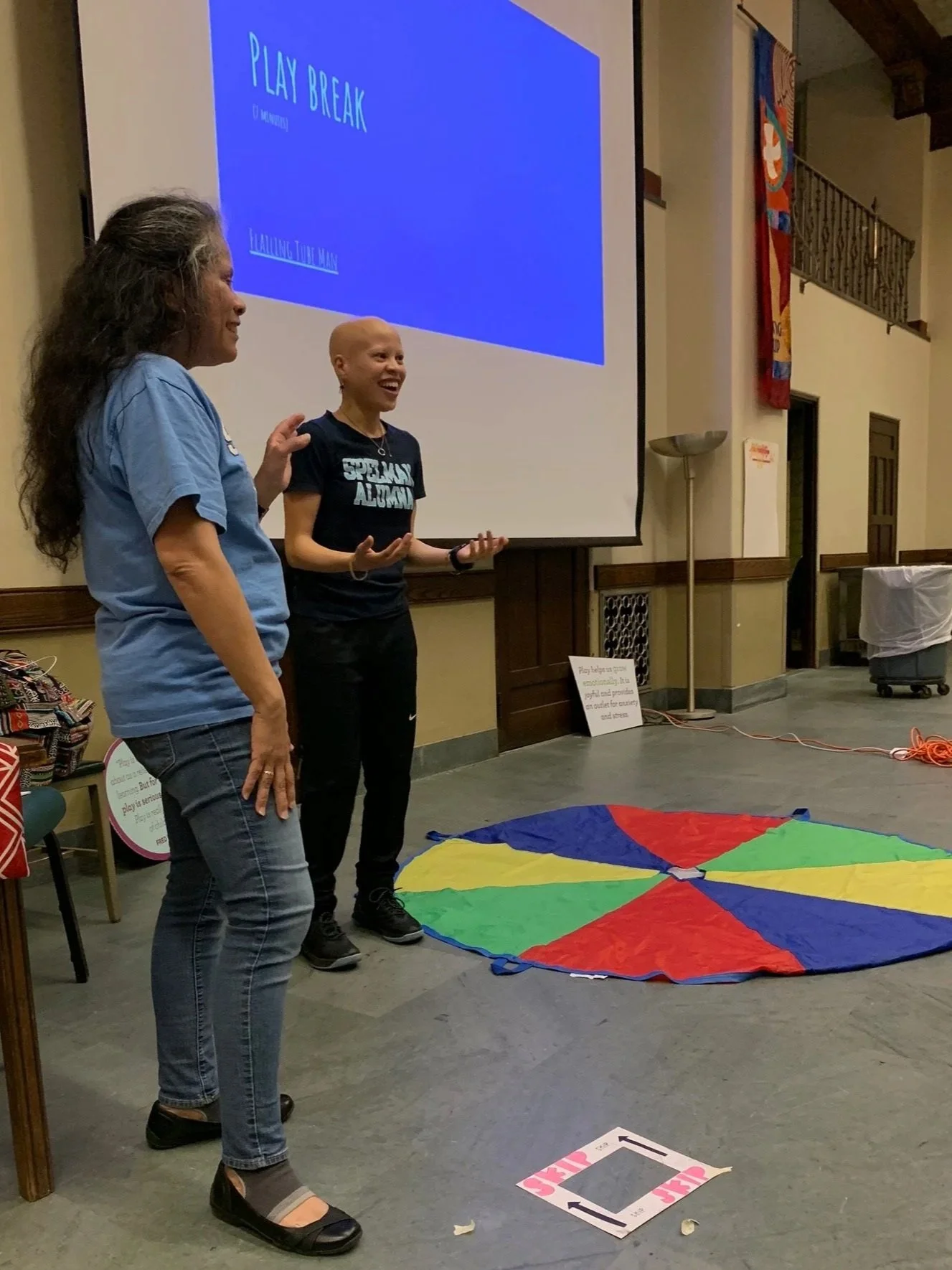
In each of our workshops and programs, we ensure the hosts are aware that our work uses an anti-racist, social justice approach. From there, we work as a team to create dynamic learning sessions that are PLAYFUL, educational, and interactive. We ensure each workshop concludes with an opportunity to practice and/or strategize best approaches for incorporating the newly learned perspectives into ongoing work.
Professional Development & Training-Based Workshops
-
This dialogue, facilitated through and between physically interactive play activities, will center the value and necessity of play, broadly, at the different ages and stages of students in k-12 education. We will provide an overview of core research findings, loop examples of in-field practice, and constructive brainstorming for fellows to begin creating their own action plans for introducing more opportunities for play into the lives of their students.
This workshop will use Julian is A Mermaid by Jessica Love (k), Ada Twist Scientist by Andrea Beaty (k5-5), Crossover by Kwame Alexander (5-8), and Let's Clap, Jump, Sing & Shout; Dance, Spin & Turn It Out!: Games, Songs, and Stories from an African American Childhood by Patricia McKissack (all ages).
-
This informative and interactive workshop highlights the various ways that Black children, particularly Black children living in poverty, play. The workshop works with participants through dialogue, physical play, multimedia components, and critical inquiry to analyze the ages and stages of play necessary for holistic child development, as well as the racialized and classed ways in which play is deprived as Black children age and grow. Finally, we consider the ways that Black children use play to respond to and protest against institutionalized racism.
-
Building on the two previous workshops, we will reflect and explore how play has connected families across generations, cultures, and economic barriers. We will define culturally sustainable family engagement as the framework for our collaborative discussion and brainstorm. In the process, we will work to identify potential barriers to engagement and consider efforts that supplant disempowering experiences that families face. Finally, we will discuss strategies for reducing logistical barriers and initiating mutually affirming, problem-solving interactions that center play as a joyful engagement tool.
This workshop will use This Is the Rope: A Story from the Great Migration by Jacqueline Woodson, Freedom in Congo Square by R. Gregory Christie, Sewing Stories: Harriet Powers' Journey from Slave to Artist by Barbara Herkert and Vanessa Brantley-Newton, How Mamas Love Their Babies by Juniper Fitzgerald. The books will factor into our discussion as narrative examples, textual tools, and immediate resources.
-
In this workshop, participants engage in interactive games designed to foster intimate fellowship, community organizing skills, and collective joy. Together, we learn and explore the ways police deprive our community of play, and how play cultivates communal resistance.
-
This summative workshop will invite participants to envision and apply the knowledge and skills they have acquired throughout the series. We will identify and assess barriers to family engagement in their community, as well as asset map their community in order to create a culturally responsive framework to address barriers. Together, through participant-facilitated dialogue and movement, we will practice the sharing of culture and exchanging of knowledge through play and critical inquiry. We will brainstorm and strategize methods of integrating play into daily interactions with their families and community. Finally, we will make space to ask and answer any remaining questions or concerns, collect feedback, and complete a closing activity.
-
In this workshop, students learn how play is research–both critical inquiry and generative data–and can produce grassroots solutions to local challenges. Through a multimedia presentation structured around cooperative play and group dialogue, students will witness how play tells stories that connect people around the world and clarify who is in the room. Together, we will practice the sharing of culture, exchanging of knowledge, and mapping local assets through play and critical inquiry.
-
To create a tailored workshop, we converse about organizational interests, strengths, needs, and perspectives on play as well as logistics. We ensure the hosts are aware that our work uses an anti-racist, social justice approach and is based on our research and knowledge of best practices regarding child development and family engagement. From there, we work as a team to create a dynamic learning session that is PLAYFUL, educational, and interactive. We ensure each workshop concludes with an opportunity to practice and/or strategize best approaches for incorporating the newly learned perspectives into ongoing work.